


Typhoon Warning (Olympic Cove, #6) by Nicola Cameron


@nicolacameronwrites

@nicolacameronwrites


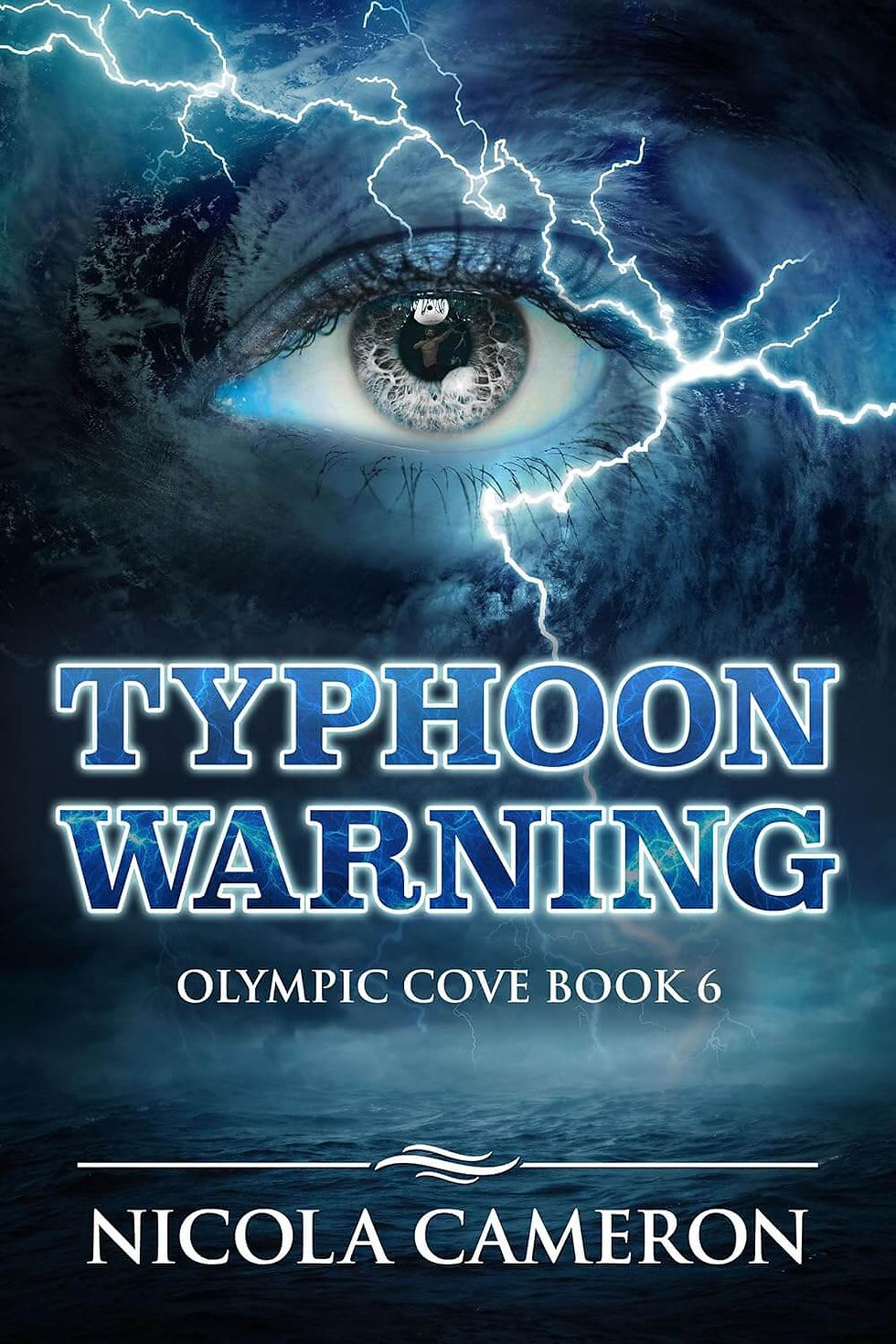
The eagerly awaited conclusion to the captivating Olympic Cove series!
Three unlikely lovers. One unhinged goddess. Zero room for error.
Once the wisest centaur in ancient Greece, the demigod Chiron finds himself trapped in a human body and thrust into his family's war against the Mad Nereid Thetis and the cunning saurian god Zhidō. To succeed, he has to win the heart of Dr. Zoe Antoniou, a brilliant paleontologist who holds the key to stopping Zhidō.
But Zoe isn't Chiron's only love.
Trapped in a magical sleep, the god of medicine Asclepius struggles with a dangerous experiment while yearning for his would-be mates. As fate and desire draw the three together, they uncover a deadly truth that could change the world ... or doom all of humankind.
Bookshop.org | StoryGraph | Goodreads | Smashbomb | BookBub


5 out of 5 (exceptional)
TYPHOON WARNING is the sixth and final book in the Olympic Cove series, although I'm hoping for a spin-off of some description after the amazing ending. I mean, you never know!
We meet up with all our old favourites, but the majority of the story belongs to Chiron, Zoe, and Pius. This was a threesome none of them saw coming, and it was heartbreaking as much as it was joyful. I loved that the three of them worked so well together, helping each other as they learned to deal with whatever new bombshell had been dropped on them.
I don't want to give away any spoilers, but can I just say... the big bads? Well now, they get exactly what they deserve! I won't say any more, but trust me. If you've read even one book set in Olympic Cove, you absolutely need to read this one.
This was a fitting end to this series, finishing everything off nicely, and leaving me with one thought... If only! HIGHLY RECOMMENDED by me.
** The same worded review will appear elsewhere. **
* A copy of this book was provided to me with no requirements for a review. I voluntarily read this book; the comments here are my honest opinion. *
Merissa
Archaeolibrarian - I Dig Good Books!
What inspired the paranormal elements in your story, and how did you build the rules of your supernatural world?
I always loved Greek and Roman mythology, so back in 2012, I got the idea of Poseidon and his family getting fed up with the condition of the oceans and deciding to do something about it. I still don’t know how that led to a science fiction writer learning that he’s the fated mate of two sea gods, but yeah, that happened. As for the rules, I borrowed heavily from mythology and mixed that up with some modern touches (e.g. gods using portals to travel places).
Did you base any of your paranormal creatures, powers, or myths on real folklore or legends?
It’s all Greek mythology. And to think my mother was exasperated with my obsession when I was a kid.
How do you balance the fantastical with the believable in your paranormal universe?
I think about how a god/merman/satyr/selkie/et al would deal with the challenges of modern life and proceed from there.
What makes your version of vampires, shifters, ghosts, or other beings different from the usual portrayals?
They tend to be a lot more sarcastic. I can’t help it—I’m married to an Englishman and Sarcasm is his second language.
What makes a paranormal romance feel grounded and emotionally real, even when the characters aren’t entirely human?
When the characters have the same emotional reactions to something that a mortal would have. The characters in Olympic Cove aren’t perfect even though a lot of them are divine—they fall in love, get hurt, screw up, and (sometimes) learn from their mistakes. I think that makes them feel more “real” to the reader.
How do the paranormal aspects raise the stakes for your central romance?
In Typhoon Warning the central trio not only have to overcome a lot of issues to get together, they’re also fighting a pair of divinities who wants to remake the world (and kill off humanity in the process). Those are pretty big stakes in addition to their burgeoning romance.
What’s your writing routine like — and how has it evolved over time?
When I was writing full time, I did my best to crank out 3K a day. Then COVID hit, then I got a knee replacement, then menopause hit, then I had cancer, then I had to get an office job. That does one hell of a number on your writing routine. I’m just now starting to feel like I’m getting my writing mojo back, so at the moment I try to get some writing done in the morning before work, then come home after work and get some more done then. The amount depends on what I can manage in the time I have, but I don’t beat myself up if it’s only a few hundred words. That’s a few hundred words more than I had the night before. Weekends are for the business side of writing, but I try to get some writing and editing done then, as well.
How do you handle writer’s block or creative burnout?
Crafting. I have to work on some other creative thing—miniatures, quilting, sewing clothes, designing 3D printed items—as I write, otherwise it’s like my brain gets overloaded and the writing slows to a crawl.
What’s your favourite part of the writing process: plotting, drafting, or revising — and why?
I’m going to expose myself as a weirdo here—I love editing. That’s where I get to take the raw text that I sploshed onto the page and shape it into a good story. I find that extremely rewarding.
How do you approach character development across multiple books or series?
I’ve built wikis for my series so that I can keep track of characters and what they’re doing in a particular book. It’s the only way I can keep things straight and make sure that I don’t send a character down a path that’s not going to make sense to the reader.
Are you a plotter, pantser, or somewhere in between and how does that shape your storytelling?
I started off as a plotter, but now I like to allow some room for pantsing because I’ve been caught off guard too many times by a character deciding that no, they were NOT going to follow the plot and they really wanted to do something else. If I tried to force them to follow the plot, the entire book would wind up hosed, so I’ve learned to leave a little room for their own life choices, bless ‘em.
Hacks to Create Memorable Characters
Memorable characters are multi-faceted. Nobody really wants to read about a cardboard cutout plodding through a story—you need to give them some shading, a hidden depth or two. For instance, nobody is all good or all bad—give your hero some bad traits and your villain some good ones. If your hero has a wee bit of a gambling problem or your villain secretly fosters kittens, that’s character nuance and it’s what makes them feel real and memorable.
What writing advice do you wish you had ignored, and what actually helped you grow?
Anyone who says that you have to write every day is clearly not juggling a full-time job, home, family, a writing career, and assorted health crises. Sometimes you need to step away from the keyboard because waves at the world. And that’s perfectly okay. The important thing is that you come back when you’re ready and you’ve got the spoons for it, no matter how long that takes.
How has your voice or writing style changed from your first book to your latest?
I’ve gotten a lot better about getting a handle on my characters’ motivations and using those to propel the plot instead of trying to impose the plot from the outside. Sometimes it’s led me down a path I did not expect to take (frex, I did not intend to include a dinosaur god in Olympic Cove, but then Zhidō made himself known to me and I realized what an excellent antagonist he would make), and to be honest I’ve found that to be extremely refreshing.
What keeps you motivated when writing feels difficult or slow?
The fact that I want to get that piece done, edited, and out in the world where (hopefully) readers can enjoy it. I love telling stories so much, and it’s both humbling and wonderful to know that I have readers who enjoy what I do.
How do you measure success as an author — beyond sales or reviews?
Fan mail. When I get an email from someone saying, “Hey, I just wanted to write and tell you I loved your book,” then my job is done.
What has been the most surprising part of your publishing journey?
How many hats I’ve put on as an indie author. I started out as just a writer—over the years I’ve also learned how to be a cover artist, formatter, marketer, salesperson (and no, those two positions are not the same thing), and online personality.
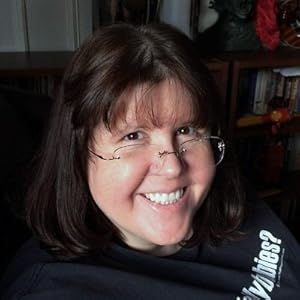
Nicola Cameron is a married woman of a certain age who really enjoys writing about science fiction, fantasy, and romance. When not writing about those things, she likes to make Stuff™. And she may be rather fond of absinthe.
While possessing a healthy interest in sex and romance since puberty, it wasn’t until 2012 that she decided to write about them. The skills picked up during her SF writing career transferred quite nicely to speculative romance. Her To Be Written work queue currently stands at around nineteen books, and her mojito-sodden Muse swans in from Bali every so often to add to the list, cackling to herself all the while.
The bulk of Nicola’s titles are SF (Degree of Resistance, Two to Tango), fantasy (Empress of Storms, Palace of Scoundrels, Lady of Thorns, Red Robin and the Huntsman, A Boon By Moonlight) and paranormal romance (Shifter Woods: Howl, Shifter Woods: Roar, Shifter Woods: Snarl, Trickster), as well as one historical romance, Behind the Iron Cross. As of 2018 she also started writing contemporary romances such as To My Muse and will be continuing this under the name Natasha M. Stark.
As for writing in general, Nicola plans to keep writing until she drops dead over her keyboard or makes enough money to buy a private island and hire Rory McCann as her personal trainer/masseur, whichever comes first. Because it’s important to have goals.
She can be reached at nicola@nicolacameronwrites.com.
Amazon | Bluesky | BookBub | Facebook | Goodreads | Instagram | LinkedIn | Mastodon | Patreon | Pinterest | Smashwords | TikTok | Tumblr | Website | YouTube


Comments