


Excerpt, Guest Post, & Giveaway: Outage by Mike Trigg


Book Details:
Genre: Domestic Suspense; Psychological Thriller
Published by: Montague Books
Publication Date: October 20, 2026
Number of Pages: 344, Pbk
ISBN: 9781646049684 (ISBN10: 1646049683)


@partnersincrimevbt.com

@MikeTriggAuthor @partnersincrimevbt

@mike_trigg254 @partnersincrimevbt


For fans of Laura Dave's The Last Thing He Told Me and William R. Forstchen's One Second After comes a riveting thriller about an internet blackout that leads one woman into a web of lies and conspiracies and her pursuit for answers.
Rachel Farrell is working from home in suburban Virginia when the internet goes out. Juggling clients, two restless teenagers, and dinner logistics with her husband, Caleb, a DC lobbyist, she assumes it’s just a routine inconvenience.
Then she finds his note, warning they are in danger and not to trust anyone.
When FBI agents show up looking for Caleb, Rachel realizes something far more sinister is underway: a nationwide internet and phone outage, and Caleb’s biggest client―a powerful Chinese semiconductor company―is at the center of suspicion.
As the night wears on with no word from Caleb, Rachel’s unease shifts into something darker. The man she has been married to for two decades may not be who she thought he was. Fearing for their safety, Rachel and her children embark on a harrowing cross-country journey to find Caleb and hear his explanation. But the more she learns, the more she suspects he may be in on the plot.
Following the clues to a remote compound in South Dakota, Rachel begins to piece together the truth about her husband, his business dealings, and a conspiracy that reaches far beyond anything she ever imagined.
In the end, Rachel has no choice but to uncover the real culprit behind the outage before it costs her everything.

StoryGraph | Goodreads | Smashbomb | BookBub


PROLOGUE
EVERY MARRIAGE EVENTUALLY reaches a decision point. A moment of truth when you either need to trust your partner completely or believe you will be better off on your own.
For Rachel Farrell, that moment is now.
As she lowers her eye to the scope of her rifle, this untimely realization hits her with sudden clarity. Those familiar vows, recited almost two decades ago, constrict her lungs now with the full weight of their significance. To have and to hold, for better or worse, for richer or poorer, in sickness and in health—they all amount to being there, always, no matter what. Doing whatever it takes. Even if that means putting a bullet in someone’s head.
The last week has put those vows to the test. Revealed the cracks that have been growing for years in her marriage to Caleb. After the euphoric whirlwind of falling in love, their relationship survived the trials of parenthood, the stresses of two high-powered jobs, the financial burdens of raising a family. But instead of pulling closer together, they’ve been drifting apart without even knowing it. Differences that once seemed so small have come to feel irreconcilable. Rhetoric that was once so supportive has become laden with microaggressions, harbored grievances, mutual suspicion, strained silence. And yet, their marriage has endured, adapted. They have kept their family together.
Rachel wishes these thoughts weren’t running through her head, not now when she needs to concentrate. But isn’t that what this moment is really about? Does she trust her husband? She knows she must decide. Knows she has put it off. Dreaded the implications, especially for her children. But marriages can’t survive in stasis. They need affirmation, renewed commitment, reinvigoration. Maybe that’s what’s happening. Maybe what seemed like a final straw is actually a newfound spark. Maybe she won’t know what she has until it’s gone.
With tears blurring her vision, she squints through the eyepiece and locates her target. At this close range, his head takes up most of the viewfinder. He’s sitting still, exposed, facing away from her. Then she sees the gun pointed at Caleb’s head. She can’t wait any longer or the decision will be made for her. She has to take the shot. But what if she misses? What will happen next? Whatever it is, she knows her life will never be the same after this moment.
Rachel suppresses her inner dialogue of self-doubt and steadies her breath. Chest pressed into the dirt along the ridge. Elbows propped against a rock. Hands clenched on the stock and grip. Shoulder nuzzled against the butt, braced for the recoil. Beads of sweat streak down her face, but she lets them drip onto the dry ground. Her hand stops trembling as she aligns the back of his head in the crosshairs. Then, she counts her exhale, holds her breath, and squeezes the trigger.
CHAPTER 1
Seven Days Earlier
“I KNOW IT’S HARD, but you have to tell him how you feel,” Rachel says into the screen of her laptop.
Easier said than done, she thinks to herself as she adjusts her camera angle. She has been sitting here all afternoon, parked in the same chair at her dining table, holding back-to-back Zoom sessions. Carrie, her last client of the day, is running up against the end of the hour, but Rachel’s best efforts to politely steer their session to a logical conclusion are proving too subtle.
Part of her feels sorry for Carrie. Her husband stopped attending long ago. It’s not a good sign when the husband—or either spouse, but usually the husband in Rachel’s experience—refuses to participate. That’s the whole idea of couples therapy, that it requires with both partners. That it’s a safe, supportive environment for discussing and resolving issues in a constructive manner. When one spouse taps out of the therapy, it usually means they are tapping out of the marriage. The next step is the domain of Rachel’s previous ten-year profession as a divorce attorney, before she found her calling as a couples therapist.
Rachel can tell that, on some level, Carrie knows her marriage may be over, despite complaining about her husband’s lack of affection, short temper, long absences as if those are root problems rather than symptoms. The fact of the matter is, once again this week, her husband isn’t here. Clear evidence that he’s done trying to save the marriage, if that was ever his intention.
Rachel glances at the clock in the upper corner of her screen, hoping Carrie won’t notice—or maybe that she will and finally realize their time is up. Rachel’s butt is getting numb. She’s running out of time to make anything for dinner. Another night of carryout is the likely solution. Without breaking sympathetic eye contact, Rachel slides her phone just underneath the camera’s view and composes a text message to Caleb.
“Last session running long. Can you pick up dinner at Lost Dog? The usual.”
The Old Town Alexandria restaurant isn’t exactly on Caleb’s way home to the Virginia suburbs of Washington, DC, but close enough. Plus, Rachel has a low-grade obsession with their bacon-feta pizza that always overrides her latest attempt at a diet. She’ll kick herself later for gorging on carbs, but screw it—it’s been a long day. Hopefully, Caleb won’t be taking clients out to dinner tonight. She knows he spent the day doing the lobbying rounds on Capitol Hill with one of them, some polyethylene manufacturers’ association or something. She needs that pizza. Rachel notes the time on her phone, 6:04 p.m., then covertly places it face down so she won’t be distracted by it again.
“I just really don’t know what else he expects me to do,” Carrie says, abruptly ending her monologue with an expectant look. Rachel snaps out of her pizza lust and forces a compassionate smile.
“Look, Carrie . . .” Rachel begins, choosing her words carefully. “We’ve been working together a long time, so I feel like I can be honest with you. I’m never going to tell you what to do, but the behaviors you’ve talked about just . . . don’t seem to be getting better. In fact, they seem ingrained. It’s very hard to change another person. And the fact Todd is no longer attending these sessions isn’t a good sign of his commitment to making this marriage work.”
Carrie doesn’t respond, but her expression is the definition of despair. Rachel immediately worries that she’s gone too far. “I’m sorry, I’m probably overstepping my bounds as your therapist, but I . . . Carrie?” Mid-apology, Rachel realizes it isn’t Carrie’s expression that is frozen; it is the entire screen. “Carrie? Hello? Can you hear me?”
That’s perfect, Rachel thinks, pushing a strand of hair aside as she clicks around in aggravation. Just when she finally delivers her tough-love message, their connection drops. The internet service at their suburban house has been so spotty lately, and calling customer service is a joke. Did Carrie hear any of that? Rachel types into the chat feature: “You froze on me. I think we lost our connection.” But nothing happens. Everything is frozen.
“Crap,” Rachel says, drumming her fingers on the table. Hopefully, a bad connection is all it is. Not Carrie getting so offended by Rachel’s candor that she left the meeting. Maybe Carrie’s phone number is in her contacts, Rachel thinks. Just as she picks up her phone to check, it buzzes—most likely with Caleb’s reply, telling her why he can’t pick up dinner, that he’ll be home late again, that they shouldn’t wait up for him. Anticipating her aggravation, she flips the phone over to see the screen, but it isn’t the message from Caleb she expects. Instead, it’s just one simple notification. “Message failed to send.”

Exploring What Scares Us About Technology in Outage
The best thrillers focus on common fears that scare us all. Whether it’s a walk down a dark alley, a sabotaged plane about to crash, or a locked-door murder mystery on a remote island, the point of a thriller is to face our fears. And what is scarier in modern life than our relationship with technology?
In Outage, I wanted to explore both the dependence we have on technology, as well as its potential to be exploited—particularly by powerful people for their own nefarious purposes.The story opens with the protagonist, Rachel Farrell, working from home in suburban Virginia when the internet goes down. At first, she assumes it’s a routine inconvenience, nothing more than overcoming the boredom of her teenagers, techy daughter, Austin, and gamer son, Derek. But Rachel soon discovers she can’t reach her husband, Caleb, a powerful DC lobbyist.
With mobile phones out too, Rachel has no information about the extent of the outage. Her suspicions escalate when the wife of Caleb’s business partner arrives asking about one of their husbands’ clients, the Chinese semiconductor giant, CTMS. Then Rachel finds a loaded gun and cryptic note from Caleb warning they are unsafe.
Not knowing what to believe,Rachel fears her husband not only knew about the outage but that operatives from CTMS are hunting him down. When FBI agents show up at their door looking for Caleb, they confirm the worst: a massive cyberattack has disabled internet and mobile phone service nationwide and her husband is at the center of their investigation.
Determined to prove Caleb’s innocence and protect her family, Rachel and the children fleeto their oceanside home in search of him. But the more she learns, the more she distrusts him. It’s her daughter Austin who manages to get a message from Caleb using an obscure hacker app, but all he tells them is coordinates to a remote location in South Dakota. Unsure if Caleb is a conspirator or whistleblower, Rachel and her children embark on a perilous cross-country journey, with CTMS agents, surveillance drones, and FBI agents on their trail. In the end, she faces a crucible moment when she has to decide if she trusts her husband.
What I love about the premise of Outage is that the technology that’s all around us—that we take for granted every day—becomes the danger. Technology has become so ubiquitous that it is almost impossible to avoid in modern life. We can’t communicate, can’t get information, can’t navigate our cars or make payments. Thanks to a semiconductor vulnerability lying dormant in the computer chips in every phone and computer, life as we know is instantly altered.
I wanted Rachel and her family to grapple with the fear of uncertainty when the very devices we all depend onevery day are rendered useless—leading to distrust and societal unrest. But I also wanted to offer a critique of the powerful people leading the technology industry. Ultimately, Rachel must unravel the mystery of Caleb’s involvement with a mercurial tech billionaire who has his own sinister agenda.
As bestselling author Alex Finlay says, “Outage taps into one of our deepest modern fears and never lets go.”


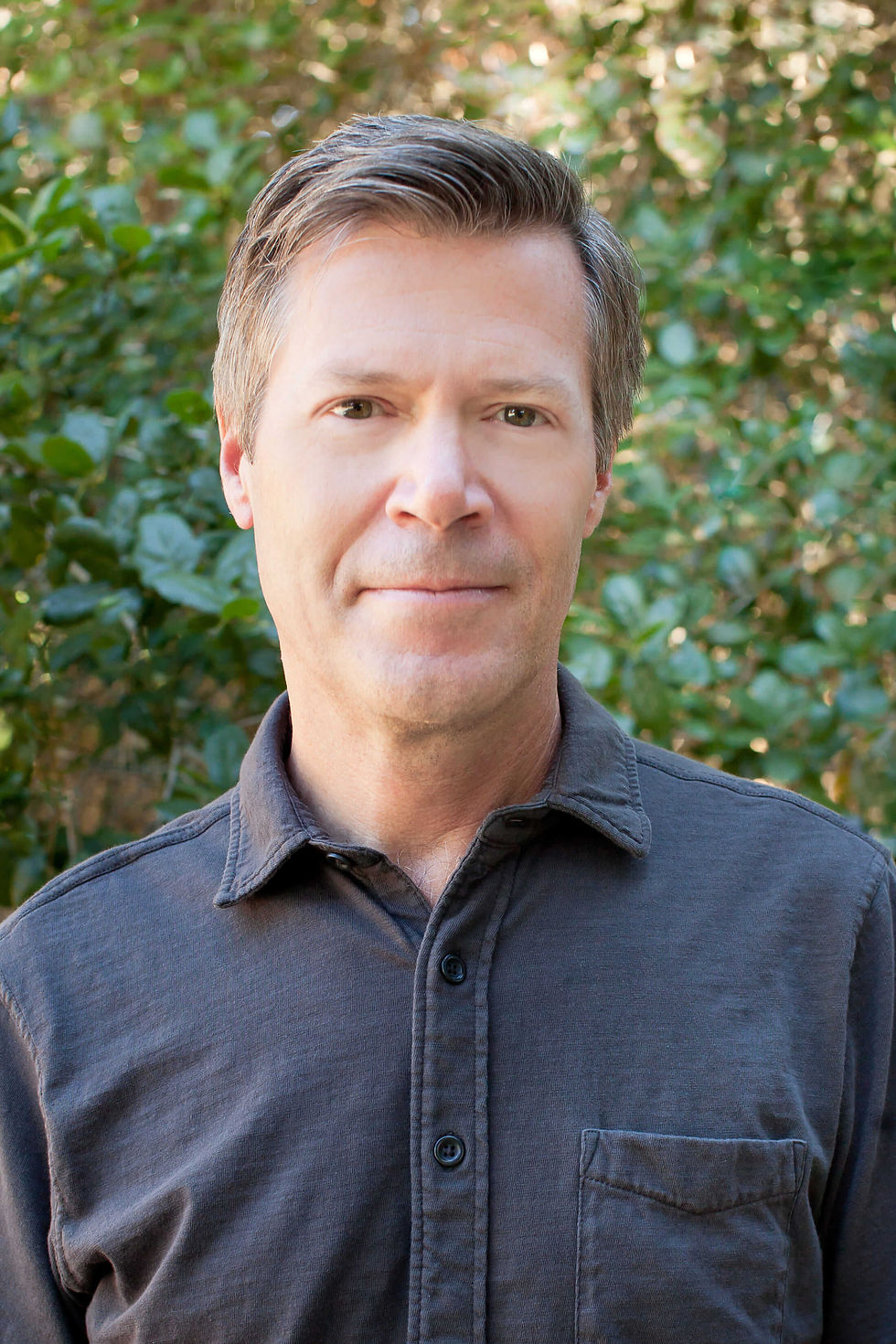
A veteran of Silicon Valley, Mike Trigg writes contemporary thrillers that explore technology’s impact on modern life. Outage is his third novel. His first, Bit Flip, was lauded as a “twisty, acerbic corporate thriller” by the San Francisco Chronicle. His second, Burner, was praised as “a cautionary tale for the digital age” by IndieReader. His work has been featured in Publisher’s Weekly, Kirkus, and Literary Hub. Born in Kentucky and raised in Wisconsin, Trigg earned a BA from Northwestern University and an MBA from the University of California, Berkeley and lives in the San Francisco Bay Area.
Catch Up With Mike Trigg:
Tour hosted by: Partners in Crime Tours


Comments